

NEWS DESK
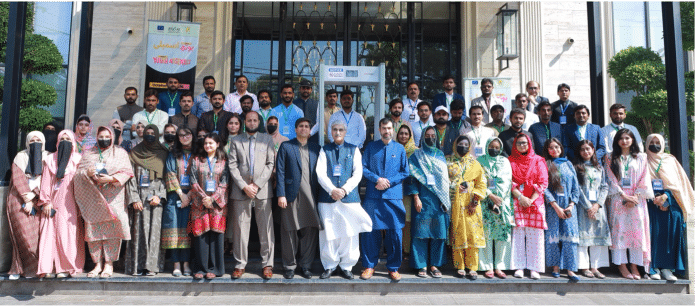
MULTAN: Young people from the District Youth Assemblies (DYAs) of Muzaffargarh, Layyah, Jhang and Kot Addu reconvened in Multan for the second round of sessions under “Rising Leaders: Youth in Climate Leadership & Governance,” a three-year initiative co-funded by the European Union and implemented by the Pakistan Institute of Legislative Development and Transparency (PILDAT) in partnership with the Social Youth Council of Patriots (SYCOP). The sessions for Kot Addu, Jhang and Muzaffargarh, were held from October 1–6, 2026, while the session for Layyah took place on October 16–17, 2026. For each district, it was a two day session, two-day sessions combined brought together DYA members, elected representatives, government officials, civil society practitioners and subject experts to discuss local governance, climate resilience and youth participation in public decision-making.
The first day focused on the institutional and policy frameworks shaping governance and climate action in South Punjab.
Participants engaged with a presentation by the DYA Secretariat on the Punjab Local Government Act 2025 and progress towards local government elections. The session examined the role of local governments in addressing community priorities and the opportunities for citizens, particularly young people, to participate in local decision-making. The programme then moved to a discussion on the Climate Resilient Punjab Vision and Action Plan 2024 featuring Mr. Babar Iqbal, Deputy Secretary / Member Board of Revenue, South Punjab, who shared his perspective on the Climate Resilient Punjab Vision and Action Plan 2024 and the challenges of translating provincial policy commitments into effective action. His contribution highlighted the importance of institutional coordination, implementation at the district level and the role of public institutions in addressing climate-related vulnerabilities. Afterwards, the DYA Secretariat presented the Draft Strategic Action Plan on Strengthening Youth’s Role in Climate Action and Governance, which outlined recommendations to strengthen young people’s participation in decision-making and their engagement with institutions responsible for climate and development policy.
The second day proceedings included presentations of digital storytelling campaign videos developed by participants, highlighting climate-related issues affecting their communities.
The programme also featured an expert presentation by Mr. Javed Iqbal of Doaba Foundation on the growing heatwave risk in the four districts. The session examined the implications of rising temperatures for local communities and the importance of understanding district-level climate vulnerabilities when developing preparedness and adaptation measures.
Ms. Somia Atta Shahani, Member of the Provincial Assembly of Punjab, also engaged with District Youth Assembly members in the during the Layyah session. The interaction reinforced the relevance of connecting young people’s experiences and district-level concerns with policy discussions and institutional responses.
Parliamentary-style debates remained a central feature of the second DYA sessions. At the end of each day by formal voting exercises, two motions were passed by formal voting exercises: “This House urges the Government of Punjab to establish a dedicated Youth Department with district-level directorates and Youth Advisory Committees to support youth education, skills development, civic awareness, leadership, employment, climate action and meaningful participation in public life,” and “This House believes that local governments should make climate adaptation a mandatory component of their local development and annual development plans.” Both motions were passed by majority vote in all four District Youth Assemblies.