By: Dr. Saira Iqbal

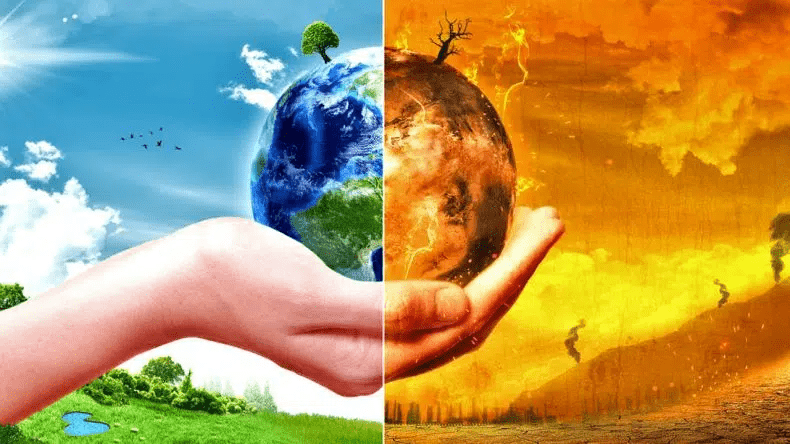
Every year, the cycle repeats. The Earth Day arrives with a familiar script, with a similar planning and slogans – plant a tree, reduce plastic, switch off lights. The narrative is for sure optimistic, solution-oriented, and futuristic. But in its urgency to inspire action, something important is often left out: what we have already lost.
This absence is not inadvertent. Modern environmental discourse tends to focus more on solutions over reflection, progress over pause. In doing so, it risks creating what might be called a politics of forgetting– a tendency to move quickly toward “fixing” the planet without fully acknowledging the depth of ecological damage already experienced. This is where the concept of ecological grief becomes crucial.
Ecological grief asks uneasy questions. What does it mean to lose a river that once defined a community? How do we process the disappearance of birds whose songs marked the passage of seasons? What happens when children grow up without ever experiencing the climate their parents once knew? These are not just environmental changes; they are losses of memory, identity, and continuity.
In Pakistan, such losses are not abstract. Farmers speak of rains that no longer follow predictable patterns. Heatwaves stretch longer, winters shrink, and traditional knowledge tied to the land begins to falter. These shifts quietly disturb cultural rhythms – harvest timings, local festivals, even everyday conversations about weather. Yet, these emotional and cultural disruptions rarely find space in mainstream narratives of Earth Day.
Instead, Earth Day often functions as a kind of button that resets symbolically. A day, a moment that gives us the confidence that change is still on its way, that right steps and actions can undo damage. While this message is also important at its place, but it is also unintentional mourning, a silent grief. By prioritizing solutions only – we risk denying people the space to feel, to reflect and to remember.
Grief is a powerful form of awareness, its not a weakness. To grieve for the environment is to recognize its worth beyond utility. It is to understand that nature is not just a resource to be managed, but a relationship to be lived. When we allow ecological grief into conversations, Earth Day transforms, from a day of surface level activism into a moment of ethical reckoning.
This shift has practical implications. Policies and campaigns grounded in emotional awareness are often more sustainable because they resonate with lived experience. When people feel the loss of their environment, they are more likely to protect what remains. In this sense, ecological grief can deepen, not hinder environmental action.
Perhaps it is time to rethink the tone of Earth Day. Not to replace hope with despair, but to balance action with acknowledgment. Alongside tree plantations and awareness campaigns, there should also be space for storytelling, remembrance, and reflection. Communities should be encouraged to share what has changed, what has disappeared, and what they miss.
Because ultimately, sustainability is not only about securing the future, but also about coming to terms with the past.
If Earth Day is to remain meaningful in an age of accelerating climate change, it must move beyond celebration alone. It must become a day where we not only ask, “What can we do?” but also, “What have we lost?” And in answering that question, we may find a deeper, more honest connection to the Earth we are trying to save.
The writer is a distinguished scholar in environmental humanities and a novelist.