By: Kashaf Imran
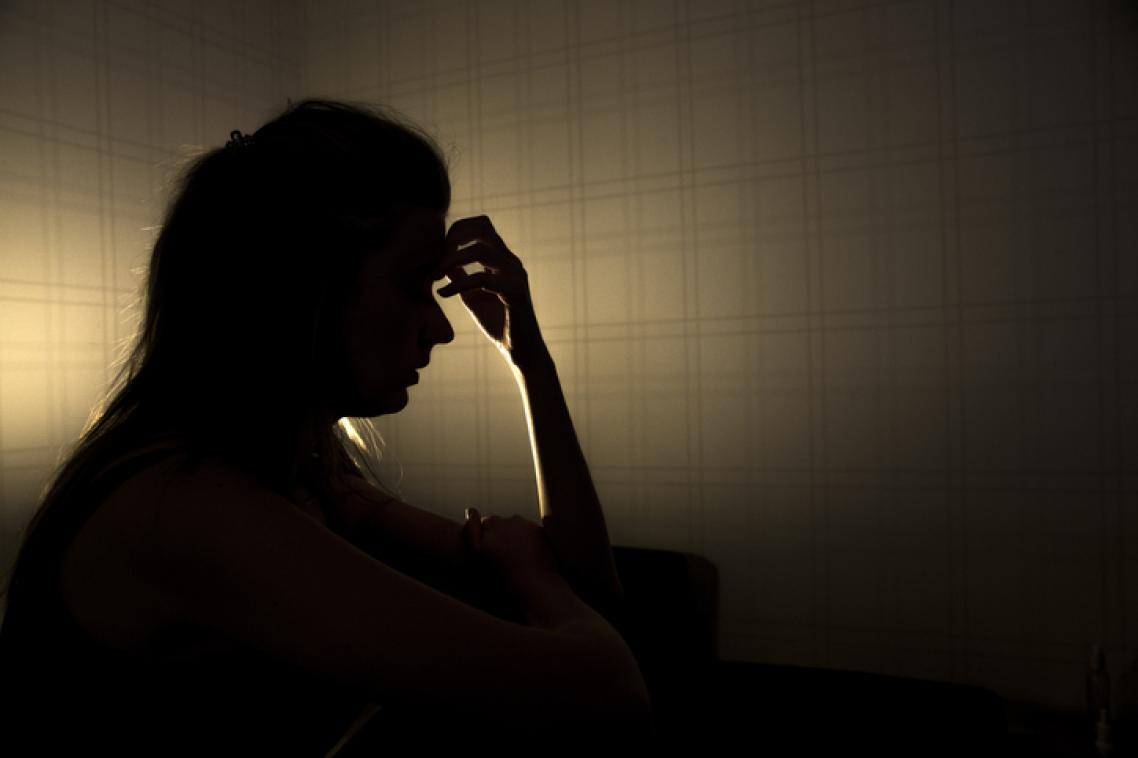
In the 21st century, not only does humanity fear traditional security threats, but it is also on the brink of threats posed by non-traditional security issues. This emphasises that if a human is under threat, a nation can’t be secure, pushing the world into the quagmire of insecurity. Most entrenched war injustices are endured by women, making them the most vulnerable targets of violence and atrocities. No conflict occurs out of the blue, and no one is born a criminal or warlord. No matter what the motive is, an act of violence due to psychological frustration leads to a chain reaction of terror, making a victim vulnerable to collateral damage caused by psychological distress, as seen in the case of Ntabo Ntaberi Sheka and the Rape of Congolese women
Ntabo Ntaberi Sheka, commonly known as Sheka, was a mine worker who turned into a warlord and raped Congolese Women post Second Congo Civil War. Ntabo was the founder of a militant force known as the Nduma Defence of Congo (NDC) in 2009 to liberate mines in Walikale from government control. Under his leadership, militants of NDC, along with him, committed war crimes of murder, rape, sexual slavery, enlisting of under-15 children, and destruction of property. Although his war crimes spread throughout the land of Congo, the village of Luvungi, in Walikale, paid the heaviest price due to being located in a prosperous mining area from July 30 to August 2, 2010. It was widely reported that within four days, 350 women were systematically raped by the NDC. According to Human Rights Watch (2015), as per UN reports between July 30 and August 2, 2010, at least 387 civilians – 300 women, 23 men, 55 girls, and 9 boys –in 13 villages along the Kibua to Mpofi road in Walikale territory by the NDC and held Sheka as the leader responsible for the mass rape. On November 23, 2020, Sheka was sentenced to life imprisonment by the Operational Military Court of North Kivu for committing war crimes. His trials, held between 2010 and 2014, revealed his unapologetic stance—he claimed the violence was the “price” for his militia’s so-called protection. The conviction followed UN peacekeeping efforts and the UN Security Council’s intervention after Sheka’s crimes caused widespread insecurity. TRIAL International reported that the scale of his attacks shocked the international community, prompting a UN investigation into the NDC. In 2011, a national arrest warrant was issued against him, and the UN Security Council added his name to its sanctions list. Finally, on July 26, 2017, Sheka surrendered to UN peacekeepers under MONUSCO in North Kivu.
The creation of the NDC and the crimes under Sheka’s rule reflected deep frustration caused by injustice and the suffering of the Congolese people amid ongoing political and social chaos in Eastern DR Congo that created a Frankestien monster of militias. Congo’s rich mineral resources have long made it a centre of conflict, exploitation, and division. This struggle led to civil wars and the rise of uncontrollable militias that challenge peace efforts. Neighboring countries like Rwanda and Uganda worsened the situation by smuggling minerals and supporting rebel groups, further fueling violence. Women suffered the most through conflict-related sexual violence. These conditions—civil war, instability, and exploitation—triggered Sheka’s anger as a mine worker, which he later turned into violent crimes against women. According to the Frustration-Aggression hypothesis, regional instability and resource exploitation triggered deep frustration in Sheka, caused by injustice and marginalisation during war. Political and economic exploitation pushed him to become a warlord and form the NDC, using violence to release his anger, mainly against women and girls. The claim of “liberating mines from government control” was only a cover for his aggressive response to long-term frustration. His anger and emotional distress turned into brutal crimes—mass rape, sex slavery, child recruitment, and forced prostitution—revealing deep trauma, a desire for power, and severe gender inequality.The Socratic Paradox “No one desires evil” reflects Adler’s view that people are not born criminals but act wrongly while believing they do good. This explains Sheka’s case—a mine worker who became a warlord in the DRC. Believing he was protecting miners and freeing mines from government control, Sheka formed the NDC, seeing it as a moral mission. Yet his actions—rape, murder, trafficking, and child recruitment—made him a source of fear and insecurity. Adler’s idea that people strive to overcome inferiority and seek superiority helps explain Sheka’s motives. Feeling powerless, he sought control and recognition through violence instead of healthy social interest. His crimes were a way to assert superiority over others, though in an unhealthy and destructive way. Failing to see society as an interconnected whole, Sheka became self-centred, seeking power without morality. A healthier path would have been using his strength and anger to improve his community. The conflict and poor conditions in DRC shaped his “mistaken lifestyle,” leading him toward crime and warlordship.
The first key takeaway from Sheka’s case is that mental health is vital for peace and security. A healthy mind builds stability, while an unhealthy one breeds insecurity. Economic hardship, social injustice, and deprivation can cause psychological frustration, which, if left unaddressed, may turn into aggression and violence. To ensure lasting peace, governments must meet people’s basic needs and prevent such frustration from growing. When the state fails to do so, individuals should have access to mental health support to channel anger and energy into positive goals. Additionally, empowering women with confidence, resilience, and leadership skills is essential to reducing vulnerability, as strength and self-assurance protect individuals from becoming victims.
Secondly, according to Adlerian philosophy, lifestyle is a personal choice that can be changed anytime. People grow when they find the courage to turn frustration into purposeful action instead of aggression. To build lasting security, mental health efforts must start at the community level through capacity building and encouragement to lead healthy, balanced lives. A healthy lifestyle creates mental strength, allowing individuals to face conflict without turning violent. Instead of becoming victims of their circumstances, they can become contributors to society’s welfare. History proves this possible—Nelson Mandela, despite enduring severe injustice, transformed his suffering into a peaceful revolution that freed his people and inspired the world. Such a transformation brings true peace. The key lies in realistic goal setting. In Adler’s view, striving for socially meaningful goals, even in hardship, is the healthiest and most effective path toward peace and stability.
Thirdly, according to Socratic paradox and Adlerian psychology, human beings aren’t inherently evil; it’s rather their misperception that their actions are for the good. Socratic and Adlerian thought assert that human beings are capable of living in harmony and being a leader, creating harmony, meaning that there is a potential for social connectedness inbuilt in humanity. Such a potential can be a catalyst for ensuring a landscape of security on the individual, national, international, and even global levels. To aptly use this catalyst, promotion of therapy and mental health counselling is the need of the hour in order to encourage and motivate individuals to strive for self-improvement for the sake of social improvement. Therapy and mental health counselling help in overcoming feelings of inferiority and in developing a sense of connectedness. Therapy would then play a significant role in helping individuals redirect their striving for superiority towards working for socially beneficial goals. Therefore, the provision of therapy before symptoms evolve into irrecoverable circumstances would help in creating a legacy of leaders instead of creating more criminals.
Lastly, to achieve peace and security, empowering women is essential. Women are not just victims of war—they have the power to be key contributors to peacebuilding and stability. The UN’s Women, Peace and Security (WPS) agenda supports this vision through four main pillars:
- Equal participation of women in peace and security decision-making.
- Protection of women and girls during conflict and promotion of their rights.
- Inclusion in conflict prevention and elimination of all forms of violence.
- Support for recovery and humanitarian aid to strengthen women’s leadership roles.
Women play vital roles in conflict-affected societies—they advocate for peace, help rebuild communities, and drive recovery after war. Since women make up half of the global population, their political participation is vital for strengthening democracy, fostering development, and ensuring that their voices and rights are fully represented.
The African proverb, “When two elephants fight, it is the grass that suffers,” captures the essence of this perspective—when the powerful clash, it is women and the vulnerable who suffer the deepest and most lasting pain. Even after wars end and peace agreements are made, the trauma women face continues for a lifetime. War and security are complex and deeply linked to psychology. When frustration and mental distress are ignored, they can drive individuals toward violence, creating fear and insecurity that harm entire communities. Yet, the case of Sheka also offers important lessons for peacebuilding. First, mental health crises must be addressed early—before frustration turns into aggression. Second, empowering women with resilience and leadership is essential so they can protect themselves and others from crimes like conflict-related sexual violence. These steps are vital for creating lasting peace and security.
The writer is an MS Scholar and Defence Analyst from CIPS, NUST, having expertise in geopolitical analysis through an interdisciplinary approach with security and psychological underpinnings. She can be reached at kashafimran59@gmail.com as well as on Instagram at @the.kashaf.imran