By: Faheem Anwar
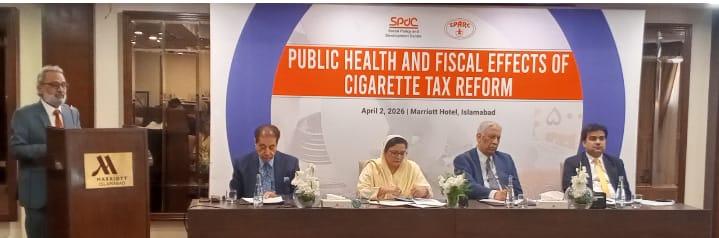
The Social Policy and Development Centre (SPDC), in collaboration with Society for the Protection of the Rights of the Child (SPARC), launched the Pakistan Tobacco Fact Sheet to highlight the role of cigarette taxation in the Federal Budget 2026–27 for improving public health and fiscal outcomes.
Presenting key findings, Muhammad Asif Iqbal, Managing Director of SPDC, stated that tobacco use remains a major public health crisis in Pakistan, causing over 192,000 deaths annually. He noted that the economic burden of smoking-related diseases is estimated at Rs 1,835 billion in 2024–25, far exceeding the Rs 266 billion collected in tobacco taxes. He emphasized that Pakistan continues to have some of the lowest cigarette prices in the region due to stagnant tax rates.
SPDC recommended increasing Federal Excise Duty (FED) by Rs 35 per pack on economy brands and Rs 21 on premium brands, along with moving toward a unified tax structure.
Nelson Azeem highlighted the serious health and social consequences of tobacco use, stressing the urgency of action. Shazia Sobia Aslam Soomro underscored tobacco taxation as a key public health tool, while Mohammad Riaz Fatyana urged prioritizing tax reforms in the upcoming budget.
Dr. Khalil Ahmad of SPARC warned about rising tobacco use among youth, noting that low prices increase accessibility. SPDC estimates that the proposed tax increase could generate Rs 51 billion in revenue, prevent 369,000 youth from starting smoking, and reduce smokers by 271,000.
Speakers also suggested focusing on tobacco taxation rather than increasing prices of essential commodities, especially amid rising fuel costs, to protect both public health and economic stability.