By: Nuzair Ahmed Jamro

It is true that the fair revenue generation is back bone of every successful nation either it is developed or developing state. Handsome revenue in all shapes plays the pivotal role in shaping the country inevitable progress. One cannot deny the fact that a nation’s true wealth is not in its treasury, but in the productivity of its people and the innovation of its industries. Same is the case with developing county like Pakistan particularly at its provincial level. Sindh is one of revenue generating pillar of country. As the state is already combating economic turmoil so, The Digital revenue generation is essential to boost the crippling economic of Islamic state like Pakistan.
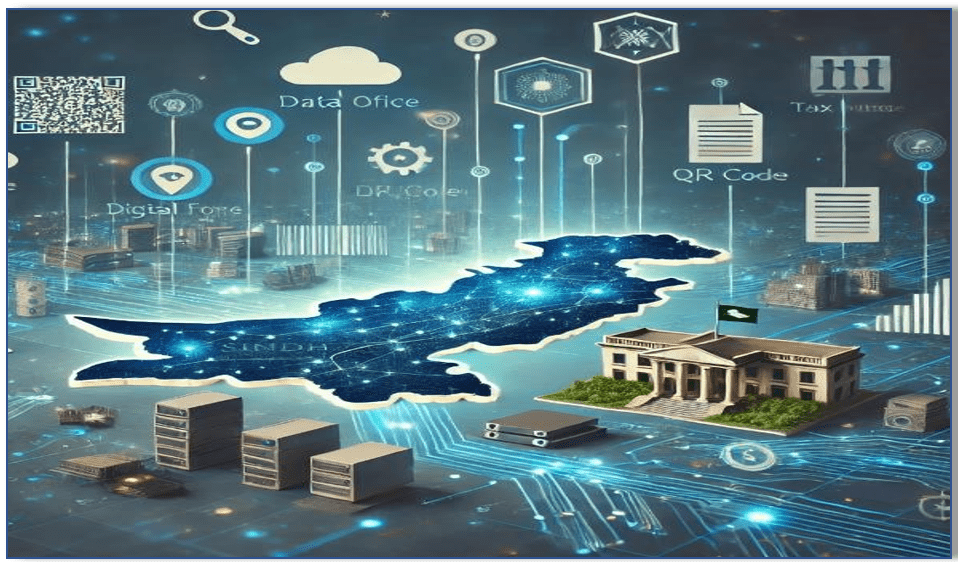
At a time when citizens expect fairness, speed, and transparency from the public institutions, the esteem department likes the Board of Revenue Sindh (LARMIS) stands at the cusp of a promising digital transformation. Initiatives such as the e-Registration and e-Mutation System, along with e-Stamp integration with national databases, are gradually replacing the paper-based records with secure online repositories. Indeed, these efforts reduce the application delays, minimize errors, and enhance accountability, providing a solid foundation for broader reform.
Fortunately, Regional experiences from neighboring states including Bangladesh, India, Sri Lanka, Vietnam, and Indonesia speak the volume of progress that successful digitalization depends not just on the technology adoption but also on the strategic IT leadership to build the integrated, user-friendly, and secure public service systems stated by World Bank in its 2021 report.
As of Sindh, it is glad to learn that the significant positive steps have been taken by the incumbent government but there remains still a room for improvement towards betterment in the service delivery and security measures. It is no secret that the Sustainable revenue is the harvest of a well-cultivated economy, not the looting of a barren one.
As far the Current Digital Landscape in BOR Sindh through LARMIS drive is concerned, the district offices are steadily moving from the manual registers to digital systems, making land records safer and easier to access; the most visible improvements include online land tax systems that allow cashless calculation and payment, partial digital tracking of mutation applications that helps reduce delays, and e-stamp with digital receipts that improves transparency and cuts down manual errors showing encouraging progress, while still leaving scope for further strengthening of services and security.
These positive initiatives demonstrate the clear positive progress, though there is still room to further enhance service delivery and strengthen security.
It is high time to Learn from the Regional struggling Neighbors like Bangladesh where Online mutation requests and tax verification through centralized citizen portals reduce physical visits and increase transparency as reported by Bangladesh Land Record Authority
Aprops,India, one of the neighboring states, is one of successful example for Pakistan to learn from digitalization where cadastral maps, ownership records, and registration systems are integrated through the Digital India Land Records Modernization Programmed (DILRMP) that allowing citizens to access verified records and track mutations online.
Not last but least, Sri Lanka has also exemplary digitalized system where the Digital governance reforms are phased, focusing on infrastructure security and staff capacity building, ensuring minimal disruption and effective adoption as said by Sri Lanka ICT Agency.
Similarly, Vietnam & Indonesia have Leveraging digital analytics and dashboards that enhance revenue forecasting, compliance tracking, and policy planning. These instances demonstrate that even developing countries can implement efficient, secure, and citizen-centric digital governance with strategic IT leadership.
There is a large scale chances for enhancement in Sindh BOR by unifying land records, taxation, mutation tracking, and citizen services into one platform, by Expanding mobile-friendly centralized portals improves convenience and transparency. However, the Consistent digital protocols across districts ensure uniform service quality. Using stored data for revenue forecasting, compliance monitoring, and fraud detection provides actionable insights and by Strengthening cyber security protocols to protect sensitive data and ensure trust in the digital systems.
These represent the constructive pathways to build on existing achievements, with room for further improvement in both service delivery and security.
It is Imperative to recognize that the Role of IT Expertise can be fruitful in this context. Strategic IT leadership is central to sustainable digital transformation. IT experts can design resilient digital architectures and workflows, Implement robust cyber security safeguards including encryption, multi-factor authentication, and disaster recovery. Such expert can lead capacity-building programs for staff as in Sri Lanka ICT Agency.
IT Skilled can ensure the interoperability between administrative systems and external databases besides Monitoring emerging technologies for adaptive and future-proof systems.
It is open secret that with skilled IT guidance, BOR Sindh can ensure digital systems are secure, scalable, and aligned with governance objectives while continuously improving service delivery.
A Positive Roadmap for Sindh BOR to be implemented by following strategies :
1. Establishing a dedicated IT and cyber security wing.
2. Developing an integrated revenue management system linking all functions
3. Creating centralized, citizen-friendly portals for verification, tracking, and payments as followed by Bangladesh Land Record Authority
4. Standardizing digital procedures across all districts
5. Implementing analytical dashboards for data-driven decision-making and compliance
6. Continuous staff training in digital literacy and cyber security as already adopted by Sri Lanka ICT Agency
7. Strengthening cyber security protocols to protect sensitive citizen and departmental data
These steps will further pave the way forward to strengthen governance, increase public trust, and position Sindh as a model for transparent and modern revenue administration.
To shrink the silky thread of discussion, it is to say that the BOR Sindh has already made notable progress toward digital maturity. With strategic IT leadership, secure systems, and citizen-focused platforms, it can become a benchmark for transparent, efficient, and modern public administration. Significantly, the exemplary digitization in neighboring states demonstrates that even developing nations can implement transformative digital systems with vision and expert guidance. There remains, however, opportunity to enhance service delivery and security measures further, ensuring that the digital systems serve citizens optimally.
The future of revenue governance in Sindh lies not in the isolated processes or paper-based records but in integrated, secure, and intelligently designed digital platforms guided by IT expertise. By embracing this path, BOR Sindh can lead Pakistan toward institutional reform, transparency, service excellence, and improved citizen satisfaction in full swing. Days are no so far, when BOR Larmis will be an iconic Digital revenue asset for Pakistan.
The writer is a government servant and freelance columnist. He can be reached at najamro@gmail.com